
At a glance
- Design the sample around the question being answered
- Make the evaluation result reusable
- A short evaluation summary with the sample identity, observations and remaining questions helps purchasing move to the next stage without losing the technical basis on which the initial decision was made.
Tell us what the sample needs to resolve
An evaluation sample is most useful when the decision is clear. Specify whether your team is checking identity, incorporation, analytical response, packaging or another defined question. Include the quantity needed by your laboratory and any reserve required for repeat work. Ask whether the sample and a possible later order will use the same specification, and clarify the batch relationship before drawing conclusions about future supply.
Keep a concise evaluation record
Record sample identity, batch reference, received condition, document version and the evaluation method. Summarize both satisfactory observations and unresolved questions. Send that record when discussing the next step with Celsentra. A structured response allows the team to address the specific issue and helps your organization decide whether to continue, request a revised sample or investigate another material.
Identify the sample
Record the exact material, lot and supplied form.
Define the purpose
State what the evaluation needs to resolve.
Record the evaluation
Keep the conditions and observations together.
Retain the reference
Preserve the agreed documents and sample history.
A useful sample starts with a clear question and a traceable record.
Design the sample around the question being answered
A sample request works best when it names the intended decision. An identity check, a preliminary compatibility screen and a packaging trial do not necessarily need the same presentation or amount. Tell us what your laboratory plans to examine and which documents it requires before accepting the sample. If the laboratory will perform destructive tests, account for those tests and any agreed retained portion when defining the quantity. A sample that is too small may force the team to omit a planned comparison; an unnecessarily large pack can create avoidable handling exposure. Keep the requested material code, supplied form and proposed evaluation in one record. If an alternative sample is offered, review its differences before treating its results as evidence for the original request.
Make the evaluation result reusable
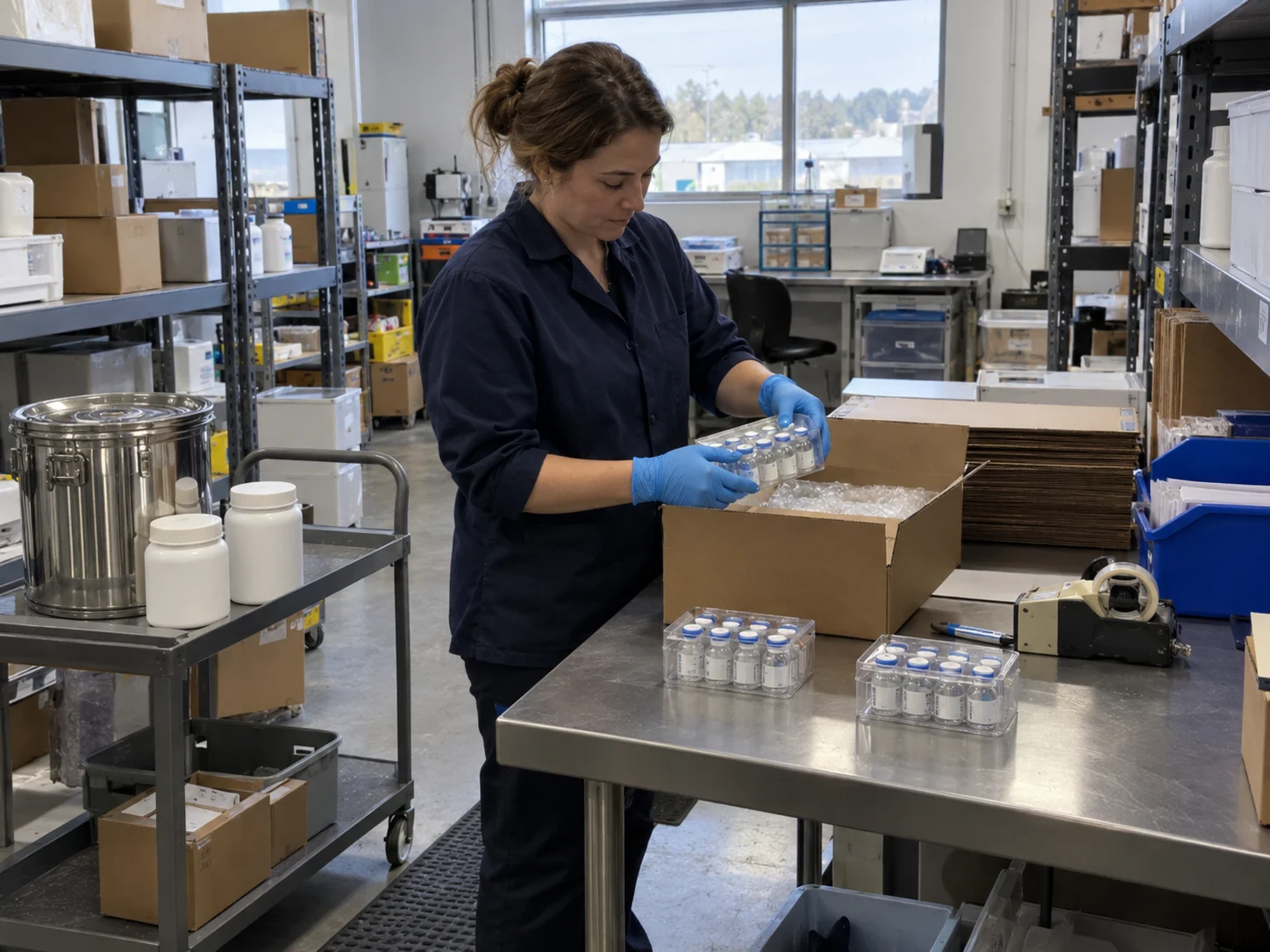
When the sample arrives, connect its label to the accompanying documents and record its condition before opening. During evaluation, use a local sample identifier that remains linked to the supplier lot rather than replacing the original identity. Record the actual preparation and test conditions, including deviations from the planned method. If the result is promising, define what was approved: a material identity, a specific lot, a formulation behavior or a package presentation. These are different conclusions. A positive early trial does not automatically approve every future lot or an altered formulation. A short evaluation summary with the sample identity, observations and remaining questions helps purchasing move to the next stage without losing the technical basis on which the initial decision was made.
Choose between a document review and a physical sample
Some early questions can be answered before a sample is shipped. A missing composition statement, unclear quantity basis or unidentified salt form is usually best resolved in the material record first. A physical sample becomes more useful once the team knows which candidate it represents and what it intends to learn.
Use the first conversation to separate questions that require documents from questions that require laboratory work. Ask about the available sample presentation, supporting information and relationship to future supply. If your laboratory needs a minimum quantity to run its chosen methods, confirm that requirement before selecting the sample size. This gives the evaluation a workable starting point.
Create an independent-testing request that can be followed
When sending a sample to an outside laboratory, include the material identifier, supplier lot, supplied form and the precise questions to be investigated. Distinguish identity testing from content measurement, and state whether an analytical result is expected on an as-supplied or another defined basis. The laboratory should confirm that the requested method and amount are suitable before the sample is consumed.
If reports must be shared with several parties, agree the reporting name and permitted recipients in advance. Keep a connection between the laboratory's accession number and the original sample label. That connection is important when the returned report uses its own identifier rather than the supplier's product code.
Compare candidates using the same decision criteria
A comparison becomes difficult when one candidate is tested immediately in its original container and another is transferred, stored and tested later under different conditions. Define which parts of the evaluation should remain consistent, including the preparation record, test timing and way results are reported. Note unavoidable differences rather than hiding them.
Decide in advance which outcomes would support the next step and which would require clarification. An acceptable appearance, a suitable analytical response and workable incorporation into a cosmetic base are separate observations. Recording them separately gives a buyer more useful information than assigning one overall pass label without explaining what actually passed.
Use the sample result to define the next order
After evaluation, send a short summary that identifies the sample, the accepted attributes and any remaining questions. Explain whether the next request is for the same lot, another lot under the same specification or a revised material. A request for more of the same should still state which parts of the sample presentation need to be retained.
If a change is required, identify it explicitly: a different pack size, a clarified reporting basis, additional documentation or an adjusted specification. Keeping these decisions together helps purchasing and technical colleagues work from the same approved reference. Sample approval then becomes a practical foundation for supply rather than an isolated laboratory result.